


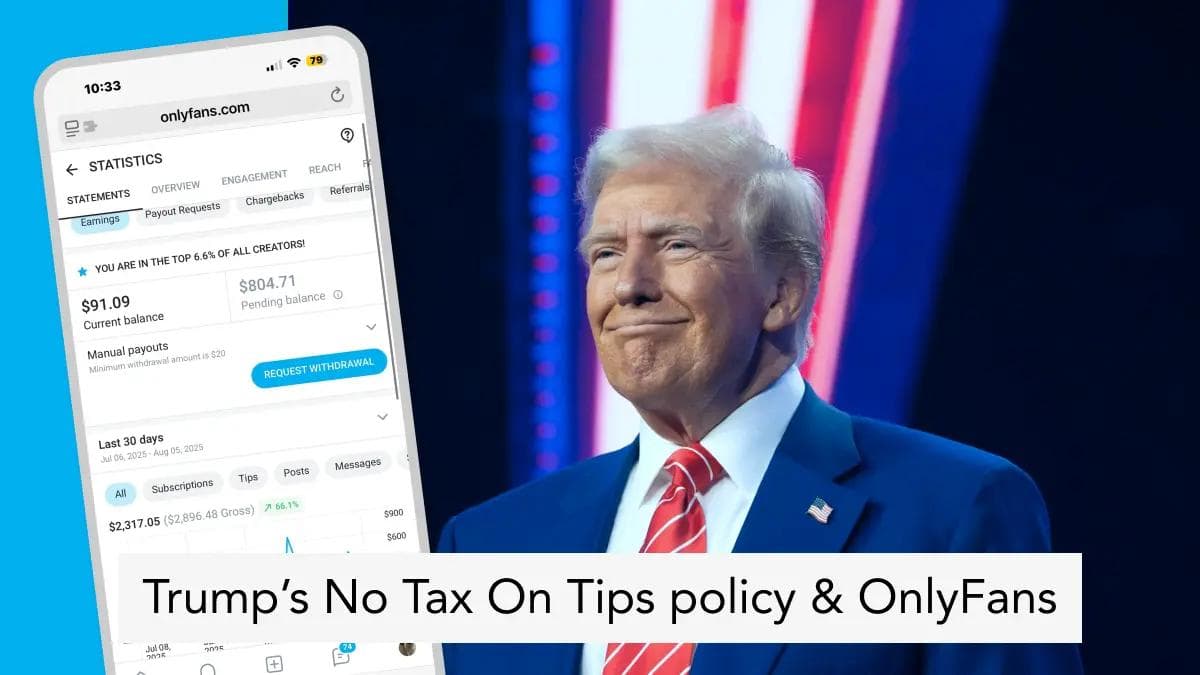
No Tax on Tips Policy and the Exclusion of Adult Content Creators
Donald Trump’s new “No Tax On Tips” tax exemption policy has just been passed, and alongside it, a list of what kinds of occupations are eligible. Among them: content creators, entertainers and dancers. While it seems only fair that adult content creators would be included under the content creator category, the Trump administration made sure to add a special amendment proclaiming that tips for sex work or “pornographic activity” would be excluded. Coming from a socially conservative Christian administration, this move is not at all surprising. Trump’s administration has worked closely with Project 2025, a conservative agenda roadmap and the manifesto of The Heritage Foundation, both of which called for an outright ban on porn, claiming it exploited children and corrupted family structures. The response to adult creators’ exclusion from this policy was met with strong feelings on both sides. Anti sex work sentiments suggested that a tax exclusion would be an inappropriate legitimization by a government that should be working to end our country’s unhealthy obsession with porn. Some argued that regardless of your moral view, adult content creators don’t qualify on a technical level. Sex workers are no stranger to conversations that question their morality and dissect the wider cultural implications of their livelihood. Understandably, they were outraged and called for the policy to be reformed.
Would adult content creators benefit from inclusion in this policy?
Moral dilemmas and technicalities aside, the question remains: would including adult content creators in this tax exclusion actually even benefit them? Should they WANT to be included?
To unpack this, you first have to understand how incredibly muddled the IRS’s terminology is. What defines porn? What is the line between sensual and pornographic? What about creators on Onlyfans who don’t do porn?
The answer is the IRS has no clue. With such vague definitions, it follows that the IRS would do what it does best, which is audit. That means looking closely into a creator’s taxes and finances to determine if the money they’re claiming as tips is eligible. In extreme cases, that could also mean IRS employees moderating and auditing the content itself.
In America at least, sex workers and content creators are no strangers to financial discrimination. CashApp, Venmo, and other payment apps strictly forbid payments made in exchange for any sexually adjacent content or services. Banks themselves have a long history of denying business accounts to sex workers, freezing funds, or even closing down accounts entirely without warning or due process. When The Free Speech Coalition issued a report on financial discrimination in sex work, they found that nearly 40 percent of sex workers they spoke to had an account closed with their banks in the past year alone.
Tax exemption cannot come at the cost of increased government surveillance
Now, of course, the goal is to get content creators paid as much as possible. But considering a substantial amount of a creator’s earnings come from subscriptions and PPV, pay-per-view content, it doesn’t seem worth it to trade increased surveillance by a federal government agency for 30 percent of just your tip earnings. In a country with no policies to stop financial institutions from discriminating against sex workers, led by an administration that is outwardly anti-sex worker, the horrible truth is that sex workers cannot trust the IRS to audit their content and finances fairly.
If you have increased surveillance, you inevitably have increased documentation. Addresses, income, social security, banking. This requires a broader conversation about our current administration’s policies and rhetoric regarding human rights, most applicable here around women’s and LGBTQ+ rights. The administration has shown that it has no problem forcibly removing people it has deemed a threat.
While we would love for every adult content creator to keep as much of their money as possible, there is only one thing we care about more, their safety.
What Policies Would Actually Help OnlyFans Creators and Sex Workers
Just because inclusion in No Tax On Tip may not be the answer, that doesn’t mean there isn’t work to be done on the policy side. What creators need are laws that better protect them from financial discrimination and stolen content, and that have been true across administrations and political parties. Where are the policies that stop Wells Fargo from closing thousands of sex worker accounts like they did in 2022? For a creator, your content is your product. Where are the policies protecting creators from getting their content stolen and illegally redistributed or sold? Until lawmakers are willing to confront the financial discrimination and digital exploitation that adult creators face every day, no tax policy will come close to addressing the real issues. Protecting sex workers begins with protecting their rights, their safety, and their ability to exist in this economy without fear.
FAQ
What is Trump's No Tax on Tips policy?
Trump’s No Tax on Tips policy exempts tips from federal income tax for eligible workers. The policy includes entertainers, dancers, and content creators, but explicitly excludes adult content creators or sex workers involved in pornographic activity due to a moral stance aligned with conservative platforms.
Are OnlyFans creators eligible for the No Tax on Tips policy?
OnlyFans creators are not eligible for the No Tax on Tips policy if their content is considered pornographic. The IRS offers no clear definition of what qualifies as porn, leaving creators vulnerable to audits, surveillance, and exclusion based on subjective interpretations.
Why are sex workers excluded from the No Tax on Tips policy?
Sex workers are excluded from the No Tax on Tips policy due to a moral amendment targeting “pornographic activity.” The administration, influenced by socially conservative groups, claims porn undermines family values and exploits children.
Would tax exemption benefit adult content creators?
Tax exemption on tips may not benefit adult content creators due to increased IRS scrutiny. Creators risk audits of both finances and content, and in an environment hostile to sex workers, that surveillance outweighs the financial gain from tax savings.
What policies would help OnlyFans creators more than tax breaks?
OnlyFans creators would benefit more from policies that fight financial discrimination and protect digital content. Laws are needed to stop banks from closing accounts and to prevent theft and resale of creator content, which tax exemptions do not address.
—
OnlySearch does not host, display, distribute, or link to OnlyFans leaks, leaked OnlyFans content, or any unauthorized OnlyFans material. Any reference to “OnlyFans leaks” on this website is for informational and educational purposes only. Leaked OnlyFans content is typically shared without creator consent, infringes copyright, and may violate applicable intellectual property, privacy, and digital piracy laws. OnlySearch expressly condemns the distribution of OnlyFans leaks and does not endorse or facilitate access to leaked content. Our platform exists solely to support lawful creator discovery and ethical engagement through legitimate, consent-based channels.